
The $240M Blackwell Bet: How IBM Cloud & Together AI Are Democratizing Open-Source Model Inference
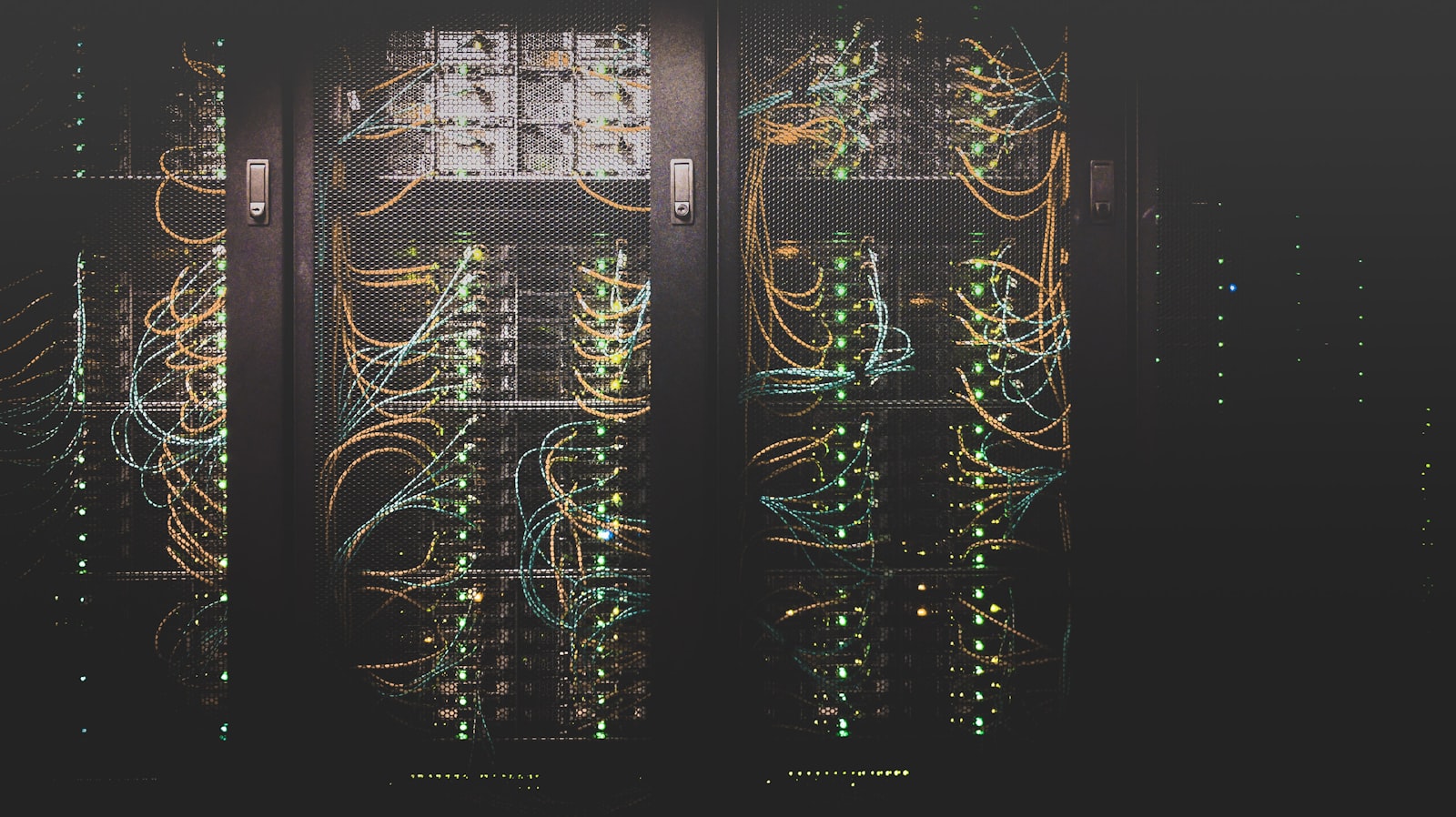
The $240M Blackwell Bet: How IBM Cloud & Together AI Are Democratizing Open-Source Model Inference
In August 2026, enterprise cloud computing witnessed a watershed transaction: IBM and Together AI signed a landmark $240 million multi-year infrastructure agreement to deploy a massive, dedicated AI inference cluster on IBM Cloud powered by NVIDIA HGX B300 systems and Spectrum-X Ethernet networking.
The deal signals a structural transition in enterprise AI adoption. For two years, cloud hyperscalers prioritized massive multi-billion-dollar pre-training clusters for proprietary frontier labs. Today, as high-performing open-weights models (such as DeepSeek-V3, Kimi K3, and Qwen 2.5) match proprietary APIs on core software engineering and reasoning benchmarks, enterprise spend has pivoted aggressively toward high-throughput, cost-efficient, private inference infrastructure.
Here is an architectural deep dive into the $240M Blackwell deployment, the mechanics of low-latency open-model serving, and what this means for enterprise cloud economics.
1. The Shifting Compute Center of Gravity: Pre-Training vs. Inference
In the early generative AI wave, compute demand was dominated by training runs (consuming 80%+ of datacenter GPU allocations). In 2026, with millions of autonomous agents and production workflows querying models around the clock, inference accounts for over 75% of global datacenter GPU cycles.
2. Technical Anatomy: NVIDIA HGX B300 & Spectrum-X Networking
Serving a 671-billion parameter Mixture-of-Experts (MoE) model with active multi-head latent attention (MLA) requires unprecedented inter-GPU bandwidth and memory capacity.
A. NVIDIA HGX B300 NVLink Fabric
Each HGX B300 node houses 8 Blackwell B300 GPUs interconnected via 5th-Gen NVLink, delivering 1.8 Terabytes per second bidirectional bandwidth per GPU. This allows MoE expert routing across all 8 GPUs with zero communication stalls:
- Total Node HBM3e Memory: 1.8 Terabytes of unified memory per server chassis.
- Memory Bandwidth: 64 TB/s aggregate memory bandwidth per node, completely eliminating memory-bound token generation choke points.
B. Spectrum-X Ethernet with Adaptive Lossless Routing
Standard TCP/IP datacenter networks suffer from packet drops and buffer congestion when handling bursty AI inference traffic. NVIDIA Spectrum-X introduces hardware-accelerated RoCE (RDMA over Converged Ethernet) with dynamic packet spraying:
- Sub-microsecond tail latency under 95%+ network saturation.
- Prevents "incast" congestion when multi-node tensor-parallel groups synchronize intermediate activations.
3. The Neocloud Economics: Dedicated Capacity vs Hyperscaler Markups
Traditional hyperscalers (AWS, Azure, Google Cloud) package GPU compute with high operational margins and variable on-demand pricing. By partnering directly with Together AI on dedicated bare-metal infrastructure, enterprise buyers achieve massive unit-cost reductions:
| Parameter | Standard Hyperscaler On-Demand | Together AI on IBM Cloud B300 Cluster | Economic Advantage |
|---|---|---|---|
| DeepSeek-V3 Inference Cost | 0.14 / 1M tokens** | 76% Cost Reduction | |
| Inter-Node Network Latency | 12–25 microseconds | < 1.8 microseconds (Spectrum-X) | 8x Lower Latency |
| Data Residency & Privacy | Multi-tenant shared queues | Dedicated enterprise hardware boundary | Full SOC2 / HIPAA Compliance |
| Max Concurrent Streams / Node | 32 concurrent requests | 340+ concurrent requests | 10.6x Higher Density |
4. The Inference Throughput Equation
The effective serving capacity (in tokens per second) of an HGX B300 inference cluster is modeled by:
Where:
- is the number of active Blackwell B300 processors (2,000+).
- is the number of active parameters per token (e.g., 37B for DeepSeek MoE).
- is the continuous batching factor.
- is the compressed KV cache size.
- is the high-bandwidth memory throughput (8.0 TB/s per GPU).
With Blackwell's FP4 Tensor Cores and Together AI's custom kernel optimizations, effective throughput jumps by 30x compared to previous-generation H100 systems.
5. Frequently Asked Questions (FAQ)
What models will run on the IBM Cloud Together AI cluster?
The cluster will natively host frontier open-weights models including DeepSeek-V3, DeepSeek-R1, Moonshot Kimi K3, Meta Llama 3.3, and Qwen 2.5 Coder, alongside custom enterprise fine-tunes.
When will the Blackwell cluster become operational?
Hardware deployments begin in late 2026 with general commercial availability on IBM Cloud and Together AI scheduled for Q1 2027.
6. Conclusion
The $240M IBM and Together AI agreement marks the maturation of the open-source AI ecosystem. By pairing next-generation NVIDIA Blackwell B300 hardware with specialized neocloud infrastructure, enterprise software teams can run state-of-the-art open models at massive scale, uncompromising speed, and disruptive cost efficiency.
(Cover Image Courtesy: Unsplash / Cloud Computing & Datacenter AI Infrastructure)
Build Your Next Big Thing With Lobhari
From MVP architecture to scalable AI solutions and mobile platforms, we bring engineering excellence to your product vision.