
The High-Bandwidth Memory (HBM) Squeeze: How Multi-Head Latent Attention (MLA) Slashes KV Cache by 93%
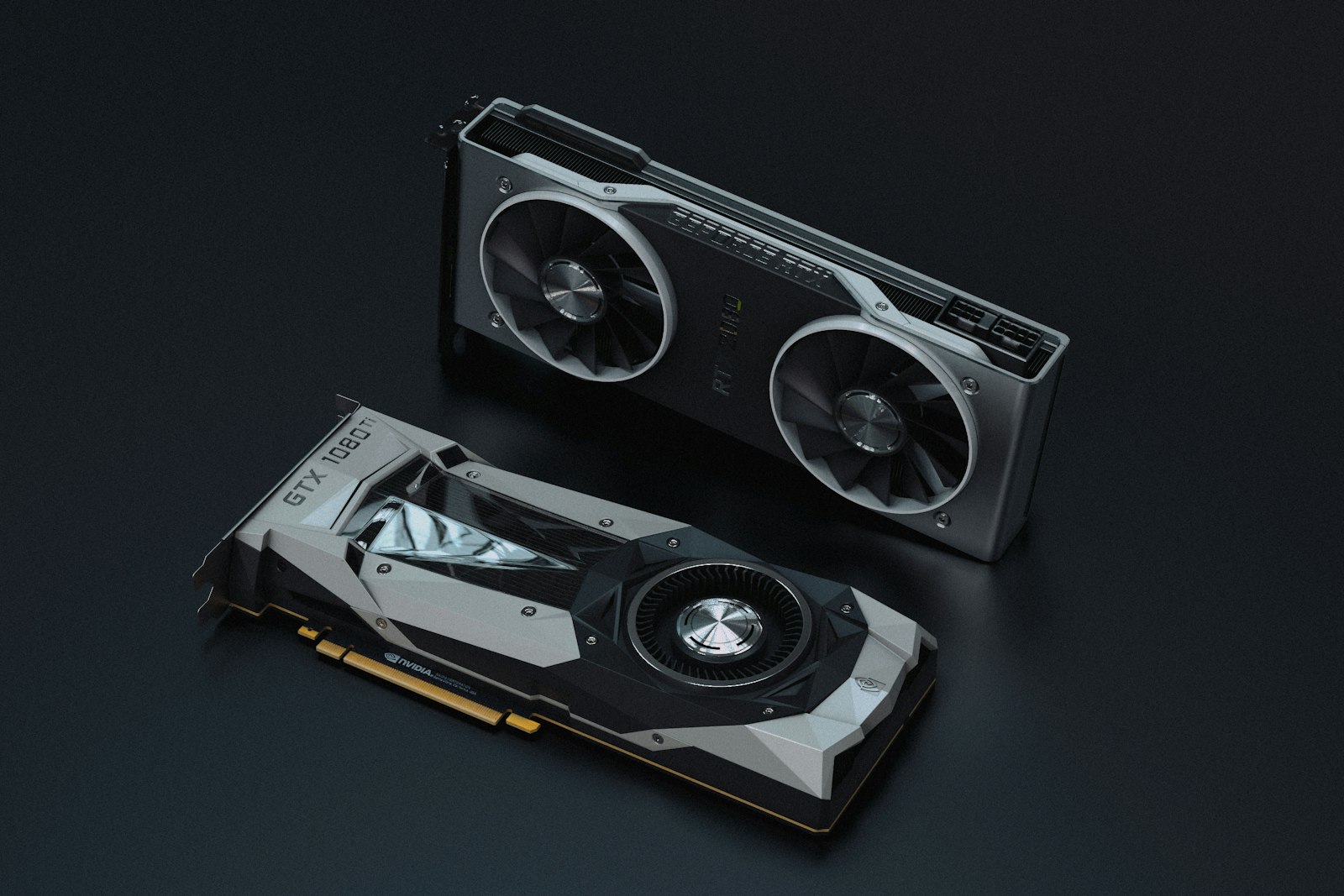
The High-Bandwidth Memory (HBM) Squeeze: How Multi-Head Latent Attention (MLA) Slashes KV Cache by 93%
In 2026, the primary bottleneck in scaling large language models is no longer raw arithmetic compute (TFLOPS)—it is the Memory Wall. As generative AI models scale to hundreds of billions of parameters, High-Bandwidth Memory (HBM3e / HBM4) packaging constraints and wafer supply shortages have created an acute datacenter squeeze.
During multi-tenant serving and long-context inference, storing the Key-Value (KV) cache for thousands of concurrent user sessions consumes the vast majority of available GPU RAM. To break this memory choke point, DeepSeek introduced Multi-Head Latent Attention (MLA)—an architectural breakthrough that compresses the KV cache by over 93% through low-rank joint vector projection while preserving full Multi-Head Attention expressive power.
1. The KV Cache Crisis in Multi-Tenant Inference
In standard Multi-Head Attention (MHA) and Grouped-Query Attention (GQA), the KV cache size per token per layer is:
For a 671B MoE model serving a 128K context window with 100 concurrent requests, standard MHA requires over 1.2 Terabytes of GPU memory solely for caching intermediate attention states, displacing model weights and causing out-of-memory (OOM) failures.
2. Mathematical Foundation of Multi-Head Latent Attention
Rather than caching individual Key () and Value () vectors for every attention head, MLA projects the hidden representation into a single low-rank compressed latent vector :
Where:
- is the layer input representation.
- is the down-projection matrix ().
- is the compressed latent vector stored in the KV cache.
During generation, keys and values are generated on the fly via matrix up-projection in high-speed GPU SRAM:
Decoupled Rotary Positional Embeddings (RoPE)
Because positional embeddings (RoPE) cannot be linearly compressed without losing relative distance information, MLA introduces a Decoupled RoPE Key Strategy:
This elegant split preserves exact positional awareness while restricting the memory footprint to a minimal 64-dimensional positional vector.
3. Production Impact & Token Economics
| Parameter | Standard MHA | Grouped-Query Attention (GQA-8) | DeepSeek MLA (Multi-Head Latent) |
|---|---|---|---|
| KV Cache Elements / Token | 128 heads 128 dim = 16,384 | 16 groups 128 dim = 2,048 | 512 (Latent) + 64 (RoPE) = 576 |
| Memory Compression Ratio | 1.0x (Baseline) | 8.0x | 28.4x (93.3% Reduction) |
| Max Concurrent Sessions (8x H100) | 12 sessions | 96 sessions | 340+ sessions |
| Inference Serving Cost | 0.80 / 1M tokens | $0.14 / 1M tokens |
4. Why MLA Outperforms GQA in Large-Scale MoE
While Grouped-Query Attention (GQA) reduces KV cache by sharing keys across head groups, it permanently discards representational capacity, degrading complex multi-turn coding and mathematical reasoning benchmarks.
MLA, by contrast, retains full independent query and value subspaces:
- Zero Representational Loss: Up-projection restores the full multi-head dimension () in SRAM before matrix multiplication.
- Matrix Absorption: During inference, the key up-projection matrix can be mathematically absorbed directly into the Query projection matrix , eliminating intermediate memory writes entirely:
5. Frequently Asked Questions (FAQ)
Can MLA be adopted by other model architectures?
Yes. Major open-weights and proprietary model architectures in 2026 (including Qwen, Mistral, and Llama derivative forks) are actively transitioning from GQA to MLA to maximize token throughput on existing H100/H200 clusters.
Does MLA increase compute latency during generation?
No. Because large language model inference is memory-bandwidth bound rather than compute bound, reducing HBM read traffic dramatically increases overall inference throughput and reduces time-to-first-token (TTFT).
6. Conclusion
Multi-Head Latent Attention represents a paradigm shift in deep learning systems engineering. By transforming a memory storage problem into an on-chip compute transformation, MLA breaks through the HBM supply wall and sets a new standard for cost-efficient, high-density AI inference.
(Cover Image Courtesy: Unsplash / GPU Architecture & Semiconductor Engineering)
Build Your Next Big Thing With Lobhari
From MVP architecture to scalable AI solutions and mobile platforms, we bring engineering excellence to your product vision.