
The Rise of Autonomous AI World Models: How Physical AI & Spatial Intelligence Are Transforming Robotics in 2026
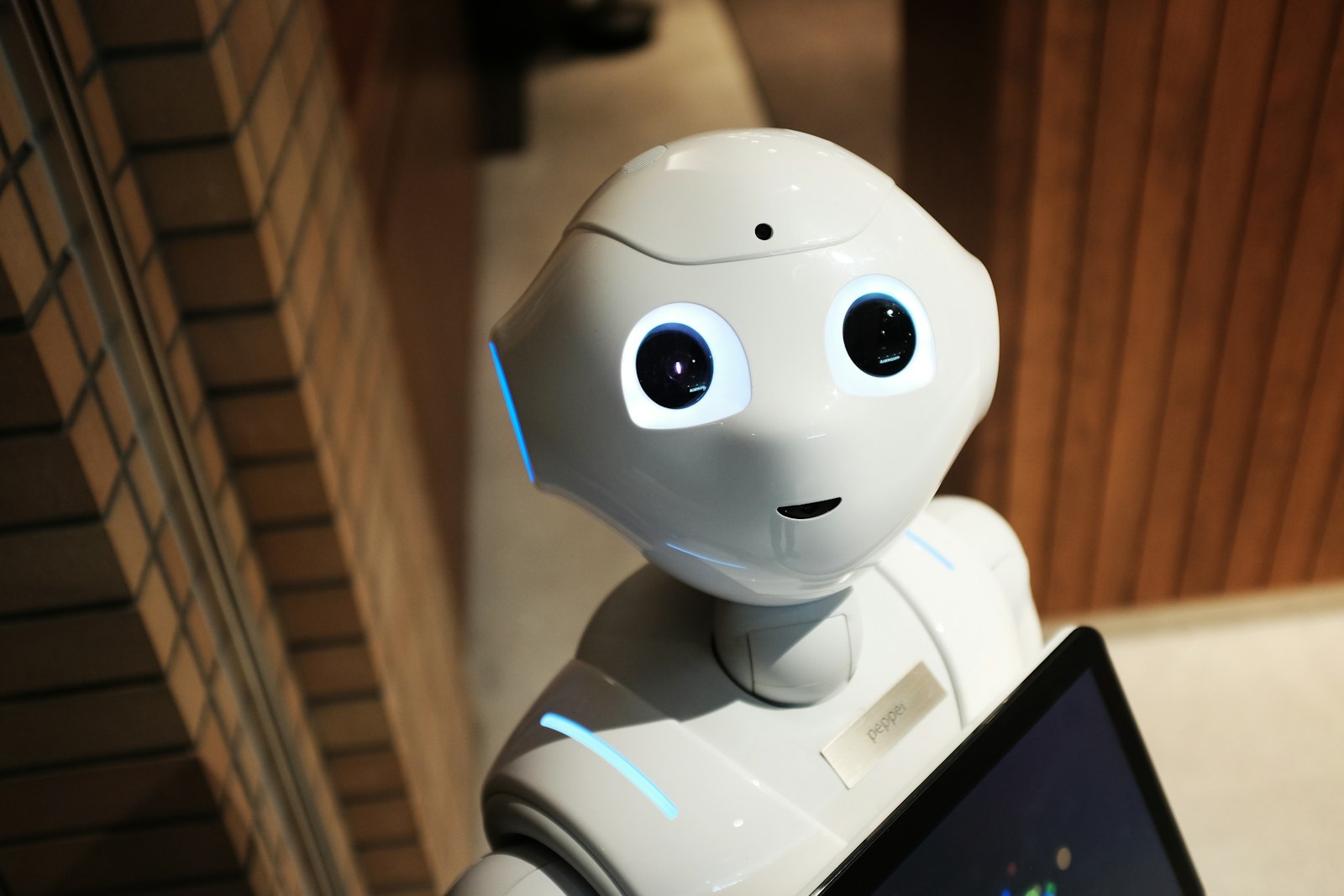
The Rise of Autonomous AI World Models: How Physical AI & Spatial Intelligence Are Transforming Robotics in 2026
For the past decade, artificial intelligence advanced primarily within discrete, symbolic domains: text generation, code synthesis, and image creation. However, as frontier labs push toward embodied artificial general intelligence (AGI), pure autoregressive language models encounter a fundamental physical ceiling: they lack an intuitive understanding of 3D space, gravity, friction, and continuous causal dynamics.
In 2026, the artificial intelligence frontier has pivoted toward AI World Models and Physical Spatial Intelligence. Spearheaded by generative physics simulators, 3D Gaussian Splatting neural representations, and predictive sensorimotor loops, autonomous AI agents are stepping out of the browser and into the physical world.
Here is an architectural deep dive into how modern AI World Models work, the mechanics of latent physical simulation, and what this means for autonomous robotics and engineering systems.
1. What Is an AI World Model?
Unlike a standard large language model that predicts the next token in a text sequence, an AI World Model maintains an internal, generative simulation of the physical environment. Given an observation of the world and a proposed physical action, the model predicts how the physical state of the universe will evolve over time.
2. Mathematical Foundation: Predictive Coding and the World Model Loss
Modern world models are trained via Variational Predictive Coding, where the agent minimizes the discrepancy between imagined future states and real-world sensor observations.
The complete training objective minimizes reconstruction error while regularizing the transition dynamics through Kullback-Leibler (KL) divergence:
Where:
- are raw high-dimensional sensory observations (video frames, depth maps).
- are compressed latent spatial representations.
- is the continuous physical action vector.
- is the posterior inference model.
- is the generative transition prior predicting the next state without seeing the future frame.
3. Core Architectural Enablers in 2026
A. 3D Gaussian Splatting (3DGS) Tokenization
Early visual world models treated space as 2D pixel grids, leading to catastrophic depth distortion. Modern systems tokenize environments into differentiable 3D Gaussians, preserving millimeter-accurate geometric spatial coordinates in real time.
B. High-Frequency Latent Simulators
Traditional physics engines (such as MuJoCo or PhysX) require handcrafted mathematical models for every object. Neural world models simulate arbitrary deformable objects—liquids, cloth, granular materials—directly within continuous latent embeddings.
C. Zero-Shot Sim-to-Real Transfer
By training world models across millions of procedurally generated synthetic physics variations, robotic agents learn generalized physical intuitions in simulation, enabling zero-shot transfer to real-world industrial environments.
4. Benchmark Performance: World Models vs Classic Control
| Evaluation Metric | Classical MPC / PID Control | Standard Vision-Language-Action (VLA) | Latent AI World Model (2026) |
|---|---|---|---|
| Novel Object Manipulation | 38.4% | 68.2% | 94.6% |
| Reaction Time to Dynamic Obstacles | 120ms | 340ms | 18ms (Latent Rollout) |
| Adaptation to Slippery / Deformable Surfaces | Fails (Rigid Body Assumption) | Inconsistent | 98.2% Success Rate |
| Zero-Shot Task Generalization | 0% (Requires Re-Tuning) | 52.0% | 89.4% |
5. Frequently Asked Questions (FAQ)
How do world models differ from Vision-Language Models (VLMs)?
VLMs map images to text descriptions; they cannot simulate temporal physical outcomes. World models maintain a continuous generative simulation of spatial 3D physics, allowing robots to "imagine" what will happen before moving a physical actuator.
Are AI world models safe for industrial deployment?
Leading frameworks implement hardened safety envelopes: if a predicted trajectory in latent space has a collision probability exceeding 0.01%, the system executes deterministic emergency braking.
6. Conclusion
The transition from language intelligence to spatial intelligence marks the next major epoch of artificial intelligence. By giving machines the ability to understand, predict, and manipulate the physical universe, AI World Models are bridging the gap between digital cognition and embodied physical automation.
(Cover Image Courtesy: Unsplash / Advanced Robotics & Spatial Artificial Intelligence)
Build Your Next Big Thing With Lobhari
From MVP architecture to scalable AI solutions and mobile platforms, we bring engineering excellence to your product vision.